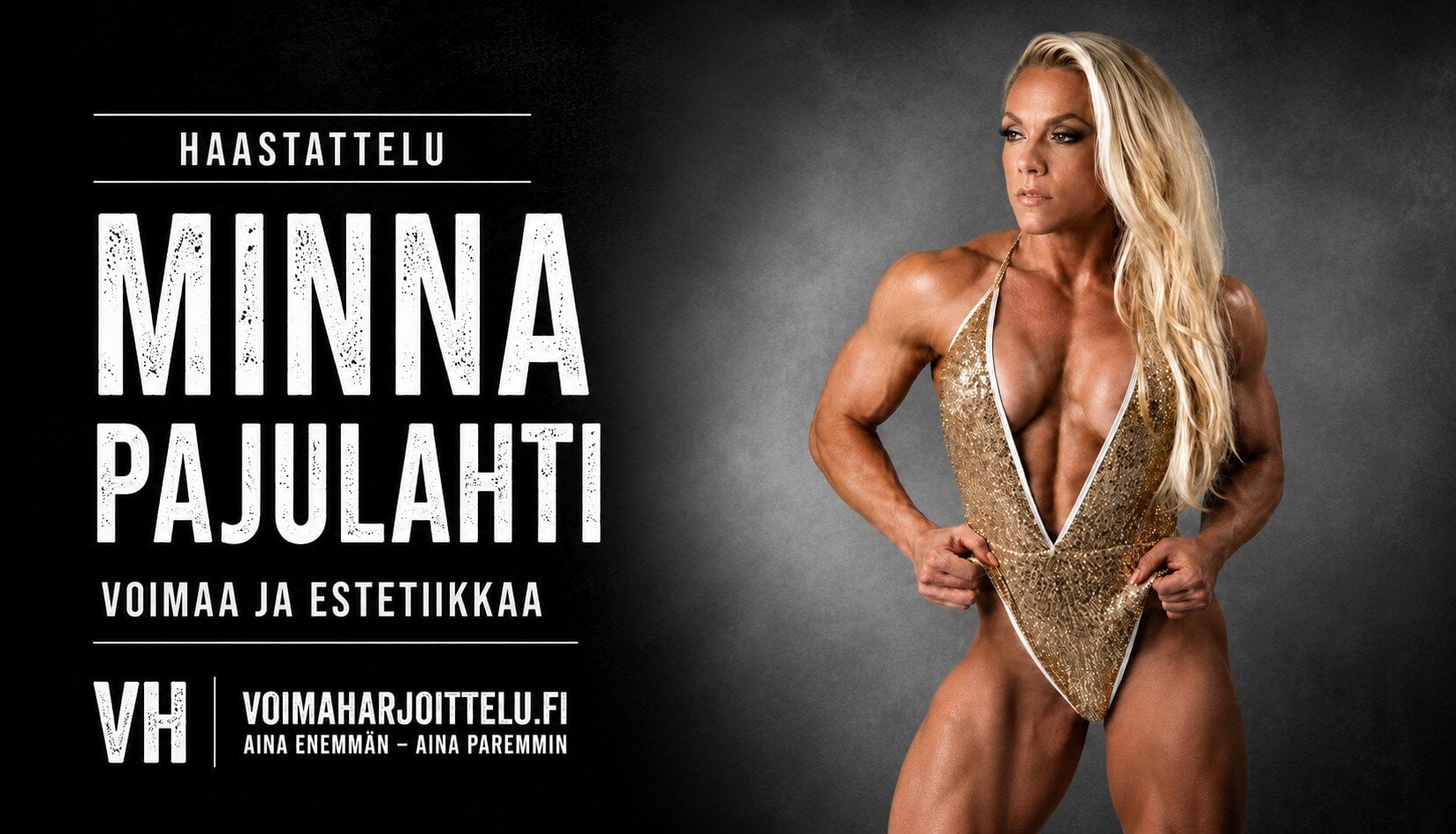
Minna Pajulahti – From IFBB Women’s Physique Pro to Elite Powerlifting
A career built on strength, reinvention, coaching and the courage to begin again
Minna Pajulahti has never allowed herself to be defined by a single sport. A former rhythmic gymnast and fitness champion, an IFBB Women’s Physique Pro, a record-chasing powerlifter, an elite coach and a long-haul flight attendant, she has built her career by repeatedly adapting to new demands.
In this in-depth interview, Pajulahti speaks openly about the Achilles tendon injury that redirected her path, the appeal of maximal strength, the growth of fitness in Finland, her coaching philosophy and the discipline required to combine international sport with life in the air.
Editor’s note: This interview was originally conducted in 2016. It has been edited for grammar, structure and readability while preserving Minna Pajulahti’s original answers, facts, personality and the full scope of the conversation. |
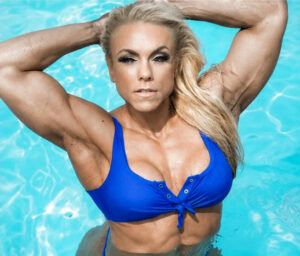
Athlete Profile
Category | Details |
Name | Minna Pajulahti |
Age at the time of interview | 35 |
Home place | Nokia, Finland |
Height / weight | 5’4 / 165–180 lbs |
Sports | IFBB Women’s Physique Pro; professional powerlifting |
Profession | Flight attendant |
Training base | Bullfarm |
Powerlifting coach | Jani Ihalainen |
Nutrition coaches | Matti Halonen and Jani Ihalainen |
Teams | Pro Elite Team; Elite Academy |
minnapajulahti | |
Minna Pajulahti | |
Athlete page | Minna Pajulahti IFBB WPD Pro / Pro Powerlifter |
Website | minnapajulahti.com |
Sponsors at the time | Fitnesstukku, Diamond Clinic, Bullfarm and Mad-Croc |
Early Years in Sport
Long before the international stages and powerlifting platforms, Pajulahti’s athletic identity was shaped by gymnastics, cheerleading and an early admiration for muscular, powerful women.
From gymnastics to fitness
Tell us a little about yourself.
I’m Finnish and I live in Nokia. I work as a flight attendant, and I coach two fitness teams: Pro Elite Team and Elite Academy. I’m an IFBB Women’s Physique Pro and a professional powerlifter, and I train at Bullfarm.
How did you discover fitness, and how did you start competing?
My competitive career began in rhythmic gymnastics and cheerleading. After ten years of gymnastics, I wanted to try something different—something in which I could compete as an individual.
Even then, my idea of the ideal female physique was muscular. I remember being a little girl and seeing my grandmother show me her biceps and demonstrate how strong she was. Looking back, I think she was the first person to influence the choices I later made in sport.
One day, someone asked whether I did bodybuilding. That question made me start looking for more information. Building muscle and performing routines immediately caught my interest, and I started competing in fitness when I was nineteen years old.
Learning the demands of physique sport
What was the most difficult part at first?
At first, the hardest part was learning to eat more frequently. I was already used to training several times a day, so that was nothing new. However, learning all the techniques and understanding how to train a muscle properly instead of simply doing exercises took time.
Building an International Fitness Career
The transition from gymnastics to fitness quickly became more than an experiment. Pajulahti rose through the Finnish ranks, reached major international stages and earned professional status.
Championship results and professional milestones
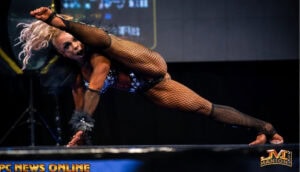
What are your best accomplishments in fitness?
I’m a multiple Finnish champion. I placed second at the Junior Fitness World Championships and second at the Arnold Classic USA. After turning IFBB Pro, I finished fifth at FIBO Power and seventh at Toronto Pro.
In Women’s Physique, I placed sixth at the Karina Nascimento Pro, eleventh at the Arnold Classic USA, fifth at the Mozolani Pro and ninth at the Puerto Rico Pro.
Returning after an Achilles tendon injury
After a few years away from competition, you started competing again. How did that feel?
Great! It was wonderful to regain my motivation to compete. I broke my Achilles tendon, and that ended my fitness career, so it took a while for me to realise that Women’s Physique could be my next direction.
I competed in four shows during the spring of 2016, and that gave me even more motivation. Now I feel that I truly am a physique athlete. I have found the flame again.
The changing face of fitness in Finland
Fitness has become much more successful and has changed in many ways. How do you see that development?
In Finland, the sport has changed a great deal. Today, almost everyone knows what fitness is, and Bikini Fitness competitors appear in magazines, television programmes and other media. The sport has become much more mainstream.
I think Bikini Fitness is one of the main reasons for that growth. It is relatively easy to begin, and competitors do not necessarily need years of work before they can enter a show or even win. In some ways, it has become a new kind of Miss Finland competition, and many women who go to the gym now say that their goal is to compete in Bikini Fitness.
Bikini Fitness has brought people from outside the sport into it, and that is a good thing. People pay more attention to what they eat, they become interested in weight training and they care more about how they look. That also benefits bodybuilding, physique and fitness because more people learn about our sports and more athletes become involved.
How do you see the future of fitness?
I believe fitness is here to stay. People have more money and time to invest in their health. There will be more competitors. Many people may compete only a few times, but the sport will keep moving forward. The future looks very big and bright.
Coaching Future Champions
Pajulahti’s influence extends beyond her own results. Through Pro Elite Team and Elite Academy, she has helped build a pathway for athletes across several fitness categories.
Building Pro Elite Team
You also have your own team. How does it work, and what have the athletes accomplished so far?
I have coached Pro Elite Team for more than five years. At the time of this interview, I have fifteen top athletes. Three of them have just earned their pro cards, almost all of them are Finnish champions, and the team also includes a European champion and an Arnold Europe champion.
We also have European and World Championship medallists, as well as many top-six placings.
Coaching and competing at the same time
How does coaching others fit together with your own training, especially when you are competing?
I think it fits together very well. There was a period when I concentrated only on coaching, but now coaching and my own training support each other.
I have learned many things about myself through my athletes, and I think I have grown as an athlete while coaching. Because I know how athletes think, work and feel, I can understand what they are experiencing. I can support them—or give them the right kind of kick in the butt when they need it.
Different categories, one team culture
What kind of athletes do you have in your two teams?
We have athletes from every area of fitness: Bikini Fitness, Figure, Fitness and Men’s Physique. The team’s success continues to grow year after year, which is why we need a qualification system.
Elite Academy and athlete selection
How do you choose new members?
At the moment, I also run Elite Academy together with Jani Ihalainen. I no longer take new athletes directly into Pro Elite Team because its members have accomplished so much and the team has grown together over time.
Elite Academy gives athletes a place to develop and the possibility of eventually moving into Pro Elite Team. Personality is very important to me. I ask whether I can see star potential, whether I want to discover what I can achieve with that person, and whether both of us feel inspired and motivated by the process.
It is a little like art: both the coach and the athlete need to feel inspired by the result they are trying to create.
Elite Academy sits directly below Pro Elite Team. Can anyone join the Academy, and how does the process work?
Not everyone can join. Applicants have to go through a similar qualification process to the one used for Pro Elite Team. However, Elite Academy can also include people who do not want to compete but simply want to get into very good shape.
We assess the person’s current condition, structure, goals and personality, as well as what they want from the process. If both the athlete and the coaches feel that the cooperation will work, the answer can be yes.
So, if someone wants to take their training to the next level, how can they get started?
They can email me at [email protected] or contact Jani at [email protected]. I also answer messages through Facebook and Instagram.
A New Chapter in Powerlifting
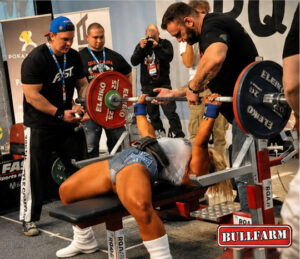
The Achilles injury could have brought Pajulahti’s competitive career to a halt. Instead, it created the opening for a new obsession: the squat, bench press and deadlift.
From injury rehabilitation to the platform
You also compete in powerlifting. How did you start?
I started when my Achilles tendon snapped. I had bench pressed and done some form of squatting for years while bodybuilding, and I had always thought that one day I would like to test my maximum strength. The injury created that moment.
I started training the bench press with my crutches beside the bench. It was extremely important that I had a very good powerlifting coach from the beginning. Jani Ihalainen taught me the correct and safe lifting techniques immediately.
He also plans my training programmes, which have helped me develop in the sport. Now I’m completely into the bench press, deadlift and squat—the whole thing. I’m a powerlifter.
The appeal of maximal strength
What fascinates you about powerlifting?
I have always enjoyed training with heavy weights. I have been much more motivated by how much I can lift than by how many repetitions I can do. Once I learned the techniques and realised that I could keep learning more, the sport became fascinating.
I love the fact that it is just you and the bar. Either you lift it or you do not. I also gain motivation from improving my records in all three lifts. At the time of this interview, I am already on the all-time top-20 list, and of course my goal is to climb higher.
What is your favourite lift?
At first, it was the bench press. I hated the deadlift and said that I would never do it. If I have to choose one now, I would probably say the deadlift, but otherwise I like all three lifts.
Best lifts and long-term goals
What are your best numbers?
My best results at the time of this interview are:
Lift | Kilograms | Pounds |
Squat | 185 kg | 407 lbs |
Bench press | 123 kg | 271 lbs |
Deadlift | 205.5 kg | 453 lbs |
Total (-75 kg / 165 lbs class) | 496 kg | 1,093 lbs |
Those are impressive numbers. Do you have long-term goals or specific targets in mind?
Yes. My next goal is, of course, to exceed a 500 kg / 1,102 lbs total. I also want to increase my squat, and I hope to reach 200 kg soon.
I have already deadlifted 215.5 kg in competition, but the lift was turned down. I want to lift that weight again and have it approved.
Raw lifting, equipment and programme design
Do you prefer equipped lifting or competing raw?
I haven’t tried equipped lifting, so I cannot really comment on it yet. I am still new to the sport, and first I need to learn how to lift big weights properly before thinking about equipment.
At the moment, I compete raw. The future—and my coach—will tell me when I am ready for gear.
You use wraps, sleeves and a belt in training, right?
Yes. I was already used to using them while training for fitness.
How do you train the powerlifts?
I bench press twice a week, squat twice a week and deadlift once a week. The programme includes maximal work, speed work, pyramids, timed sets, board presses, chains, Slingshot work and other variations.
The training is extremely versatile. Jani Ihalainen is a master at planning it. He designs everything, and I simply execute the programme.
Strength Meets Physique
Although fitness and powerlifting reward different qualities, Pajulahti sees them as complementary rather than contradictory. One built her muscular foundation; the other sharpened her approach to intensity and performance.
Different mentalities, one athletic foundation
What is the biggest difference between powerlifting and fitness?
In powerlifting, I have to focus on lifting the maximum weight and find a more concentrated, aggressive side of myself. The mentality is different.
I have learned to train harder because I now know where my true maximum is. My attitude towards training has become tougher, and I can push beyond my limits more often. At the same time, fitness gave me a very good foundation for maximum-strength training.
Looking at your numbers, it seems the two sports work very well together.
Yes, they do. My training might begin with the squat, for example, and then finish in a more bodybuilding-style way, pumping and building the muscles.
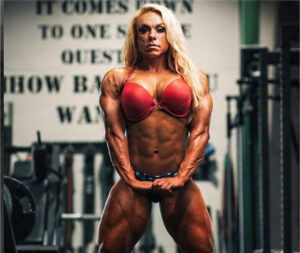
Nutrition, Calories and Contest Preparation
The demands of physique competition and heavy powerlifting are not identical, and Pajulahti’s nutrition changes dramatically according to the phase of training. Protein, however, remains the constant.
Everyday eating and strict contest diets
What does your diet consist of?
When I am not preparing for a show, my eating is more flexible. I still eat a lot of protein: eggs, meat and dairy products, together with good fats such as olive oil and nuts. Some days I eat mainly protein and fats; on other days, I include more carbohydrates.
When I am dieting for a competition, everything becomes very strict. Then the diet is built around protein and good fats because that approach works for me.
How much does your diet vary between a normal training season, powerlifting and cutting weight for a fitness competition?
It varies enormously because my daily intake can range from roughly 800 to 5,000 kcal, depending on whether I am on a contest diet or training heavily.
However, I always make sure that I get enough protein and amino acids. Amino acids remain part of my routine every day.
Reaching 5,000 calories and working with coaches
Five thousand calories a day is a lot. There probably isn’t any beer included—what does that intake consist of?
Nuts are my enemy! They contain a lot of calories, and I can eat plenty of them, so reaching 5,000 kcal can happen quite easily.
Otherwise, my food is much the same: eggs, meat, chicken, cottage cheese, quark, salads, olive oil and, every now and then, something sweet as well.
Do you plan your nutrition yourself, or do you have a nutrition coach?
Matti Halonen from Finland has coached me for years. He takes care of my diets and meal plans together with Jani Ihalainen.
Balancing Elite Sport with Life in the Air
Outside the gym, Pajulahti works in a profession defined by irregular hours, long-haul travel and changing time zones. Her solution is not to wait for ideal circumstances, but to plan around the realities of the job.
Planning training around long-haul flights
You work as a flight attendant. Being airborne must be hard on the body.
It is, but I also see it as a question of attitude: what are you willing to do for the thing you love most?
I have to plan my training so that I do not schedule a hard squat session immediately after a flight from Japan to Helsinki. When everything is planned properly, it works.
How do you combine work and training?
Before long-distance flights, I usually train in the morning. Sometimes I go to the gym while I am abroad, and sometimes I keep that day as a rest day. During a one-night layover, I normally do cardio and stretching.
I have combined work and training for so many years that it feels natural. The bigger question might be how I would manage without that combination.
Sharing the Journey
Social media gives Pajulahti a direct connection to supporters around the world. During difficult preparations, that connection becomes more than publicity—it becomes a source of motivation.
Fans, training discussion and photo shoots
You are active on Facebook, YouTube and Instagram. What is all the publicity like?
I enjoy being active on social media. If I had more time, I would probably use Snapchat and other platforms as well. Social media allows you to interact with people all over the world.
When I am dieting for a competition, support from fans is incredibly valuable and gives me strength to keep going. Social media is also a good place to discuss interesting subjects related to training and nutrition.
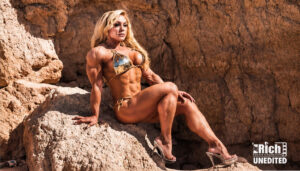
I love doing photo shoots, and I find it motivating to see other people in the industry share photographs from shoots, competitions and training. I truly appreciate every like and every comment—thank you for them.
Looking Ahead
At the time of the interview, Pajulahti’s calendar was already full: international powerlifting, fitness coaching, judging, modelling and travel. Her response to that workload was characteristic—more enthusiasm than hesitation.
Powerlifting, fitness, coaching and modelling
What is next for you?
Next, I will compete at the GPC Powerlifting World Championships in Serbia, and later in the autumn I will compete at WABDL in Las Vegas. I will finish the season at the Tatu Avola Memorial competition held at Bullfarm.
My plan for next year is still a little open, but I will probably compete in Women’s Physique during the spring and summer while continuing with powerlifting at the same time. I am very interested in doing more powerlifting competitions in the United States, and I have already looked at a few events that really interest me.
The Finnish Nationals in Fitness are also coming up in a few weeks, so this month and the next will be very busy with coaching and judging. I will also travel to Arnold Europe and the IFBB World Championships to coach and judge.
I am doing a lot of modelling as well. My schedule is busy, but it is also extremely interesting. People can follow my training, coaching, travelling and everyday life through my social media channels and, soon, through my website.
Final Words
The conversation ends with mutual thanks—and with a sign-off that captures Pajulahti’s energy and sense of humour.
Thank you, Minna, for taking time from your busy schedule for this interview. Good luck with all your future endeavours.
I want to say a big thank you to my fans and sponsors—and to Sakari for making this interview. May the Force be with you!
Interview by Sakari Selkäinaho
Teams, Channels and Sponsors at the Time of Interview
Minna Pajulahti
Instagram: minnapajulahti
Facebook: Minna Pajulahti
Athlete page: Minna Pajulahti IFBB WPD Pro / Pro Powerlifter
Website: minnapajulahti.com
Pro Elite Team
Instagram: proeliteteam
Facebook: Pro Elite Team
Website at the time of interview: proeliteteam.com (coming soon)
Elite Academy
Elite Academy was operated by Minna Pajulahti together with Jani Ihalainen as a development pathway connected to Pro Elite Team.
Sponsors
Fitnesstukku, Diamond Clinic, Bullfarm and Mad-Croc.